
Learn to improve your science writing skills
Dr Marina Hurley’s Writing Clear Science teaching program will help you permanently improve your writing skills, without needing to rely on AI. We offer live online workshops, self-paced online courses and one-on-one coaching.
Our Services

Live, online workshops
Dr Marina Hurley delivers live, online science writing workshops from 1 to 3 hours in duration. These interactive workshops cover science writing topics crucial to improve the clarity, impact and efficiency of your scientific writing.
Registrations are capped at 20. Attendees receive practical, reusable worksheets that can be applied immediately to the preparation of research papers, theses, reports, grants and other scientific documents.
Email admin@writingclearscience.com.au to receive notifications about upcoming live workshops.

Online courses
Dr Marina Hurley currently delivers two online courses that you can complete at your own pace, within a 3 month period.
‘How to be an Efficient Writer’ helps you rapidly design a content-rich first draft document, without having to rely on AI.
‘The Essentials of Sentence Structure’ shows you how to make your sentences concise and clear.
Registration includes feedback on your writing exercise answers, reusable worksheets and 6 x one-on-one online tutorials.

Coaching & Feedback
Dr Marina Hurley offers individual coaching tailored to your specific writing goals and challenges.
Coaching includes detailed feedback on your writing and one-on-one online sessions that focus on improving the clarity, structure and effectiveness of your scientific documents.
Dr Marina Hurley will help you communicate your ideas more clearly, avoid common writing problems and develop skills that can be applied to future documents.
You can sign up for individual or multiple sessions on mutually-agreeable dates.
SUBSCRIBE for updates about our latest blogs, workshops and writing courses.
About Dr Marina Hurley
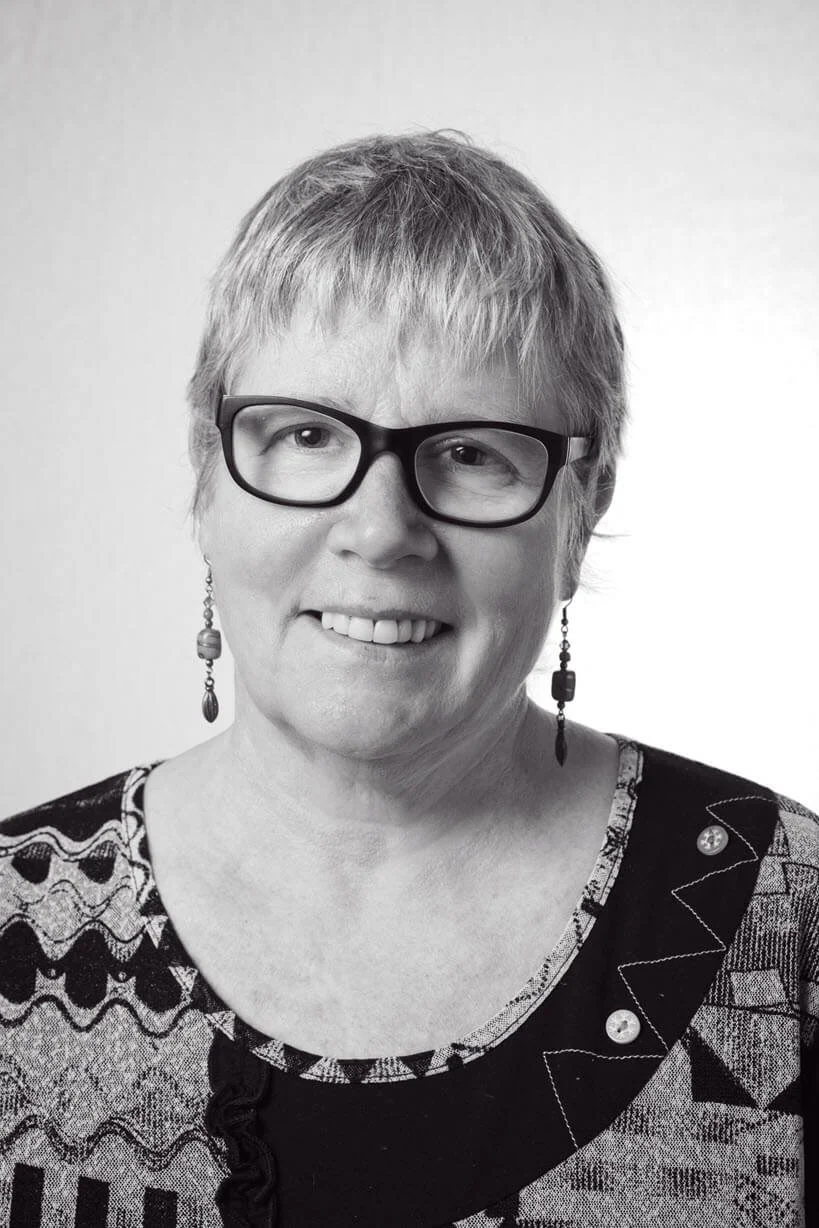
Originally an ecologist and entomologist, I received my PhD in Zoology (Insect-plant interactions) in 1997 and then worked as an academic and researcher. I found that I loved giving students feedback on their writing and switched to teaching writing full-time in 2004. Since then, I have developed a unique approach to teaching science writing that I deliver through my Writing Clear Science workshops and online courses. I teach scientists, students and science professionals from all walks of scientific life and all science disciplines.
I always look forward to seeing what current projects my students are working on and find it immensely rewarding to see how my teaching has helped so many people.
You can read more about my background au.linkedin.com/in/marinahurley/
Read my blog here
Marina Hurley
The core principles of Writing Clear Science

Always write clearly for your target audience
Deciding what to write about and what type of document to prepare is usually straightforward for most writers. However, deciding who we are writing for is not always thoroughly considered. To a large degree, the audience of a document is determined by the type of document and the subject matter but unless researchers and other science writers have a background in marketing, the concept of identifying and catering to a target audience might not be a high priority.
Read more from Marina’s blogpost ‘How to identify your target audience.’
Anyone can write about science
You don’t need to be a scientist to write about science. You don’t need a degree to do science writing. Anyone can write about science, irrespective of their background or qualifications. Occasionally some people assume they are not science writers if they are not publishing papers, but if the work they write about describes scientific processes, follows scientific procedure or refers to scientific research, then it is science writing.
Read more from Marina’s blogpost ‘What is Science Writing?’

Aim for the highest quality, but not perfection
Science is a process of looking for answers and working on the best way to find these answers. It is not perfect; it couldn’t possibly be as it is done by humans in an imperfect world. What we know to be true today may be completely wrong at some point in the future, but this is what science is about. Scientific knowledge will always be incomplete. As soon as we find answers to one problem, up springs 10 more questions that demand attention. The search for answers will always bring new questions and new ways of looking at the world. Science is self-improving and never-ending; science is a work in progress.
Read more from Marina’s blogpost ‘If science was perfect, it wouldn’t be science.’
Featured Blog post:
Don’t rely on AI to write for you

Using AI to write for you may seem quick and easy, but will this mean you are giving up your role as the author? Think seriously about giving up crucial opportunities to learn to improve your fundamental communication skills.
Writing is a crucial skill to learn for anyone who communicates in any profession. It is crucial because it is an extension of your thinking. Your writing represents who you are. Writing improves improves your critical thinking and critical thinking improves your writing.
The capability of AI to do a whole range of tasks is increasing at an exponential rate, including writing. Not only can AI write sentences in paragraphs for you, it will get to the point where it could write a scientific paper from start to finish.
If you use AI to write about topics that are well-known and well researched, then you might feel confident to allow AI to write about this topic. However, it’s your interpretation of that topic that is crucial to developing your understanding and perspective of that topic. No matter how poor you think your writing might be, it is still you - the human - who benefits from learning how to improve your writing.
Even if you use AI to create a first draft, you are relying on AI to correctly produce the content for your topic. However, if your topic is not well researched, small in scope, or unique to your particular situation, then AI might not correctly interpret your topic. You may then end up spending the same amount of time editing and rewriting what AI has produced, instead of writing it for yourself.

You might use AI to help make your writing more concise. It’s so easy to do because many email programs have AI embedded and prompt you with corrections. But the decision process in making writing more concise is not black-and-white; often what you write depends upon your audience, your purpose and your topic.
I have no problem with using AI to help restructure or rewrite a particular tricky sentence but relying on AI to restructure all sentences or to decide what is the most important summary point of a topic, would mean I was no longer the author.
Let’s Imagine that you have started a new job and you were given the task of writing a one page summary of a current project. Of course, you could put the content of the relevant documents into AI and ask them to write a summary but it wouldn’t be you doing the reading, the reviewing and deciding of what is important and what is crucial about this project. You may save time and effort using AI but you then lose your voice.
Writing involves a lot of steps and it gets easier the more experienced you are - as with any skill. The same could be said with speaking. Would you use an AI bot to replace you In a conversation with your partner or your friend?
The Writing Clear Science teaching program helps you understand how to tackle each stage of the writing process, how to write different documents And how to critically review and improve what you have written. How AI may help, or distract you, from your learning goals is included in The writing clear science teaching program
© Dr Marina Hurley 2026 www.writingclearscience.com.au
Any suggestions or comments please email admin@writingclearscience.com.au
Read Dr Marina Hurley’s other blog posts about the use of AI in science writing:

Testimonials
“The How to be an Efficient Writer course provided me with a robust toolset that is delivered within a clear and straight-forward framework, which emphasises key science-writing principles.”
— Geordie Scott-Walker, Consultant Ecologist
“I credit Marina for teaching me, step by step, the skill of producing a scientific document in a time frame expected at a professional level. I am so grateful for the knowledge I gained and have continued to use for every writing project since."
— Clancy Hall, Research Scientist
“...when I went through the course, I absolutely enjoyed it and I wished I knew about it earlier! Your teaching helped me develop my confidence and has been a huge transformation for me with my current working environment.."
— Manjeeti Juggernauth, Marine Biologist
Have a Question?
Complete the form below and we’ll get back within one business day.